Monday, 24 October 2011

The Island of Bohol

Day 1

The start of my first long holiday since moving here in July coincided with the arrival of my German friend Soeren. Consequently, we marked the occasion by boarding a plane to Tagbilaran on the island of Bohol. Terminal 3 in Manila was packed with holidaymakers heading off in all directions around the Philippines and just about every plane that people were trying to board seemed to be delayed.

The highlight of the journey for me was watching Soeren being accosted by a guard at the scanning machines, when security personnel were most offended to discover that he was packing that most deadly of all known weapons in his bag, an umbrella. Not only was he carrying a small foldable model less than 15cm in length, but he was doing so on an internal flight to boot! The outrage was clearly palpable. So with the X-ray image having given the game away, the bag was immediately searched by a scowling security guard, who promptly despatched with the offending item in the evident interest of passenger well-being and safety.

We then realised with a combination of incredulity and hilarity that he was evidently not the first person to fall victim to such officiousness, as we discovered the existence of a deluge of confiscated umbrellas in a large container in the immediate vicinity of the security checkpoints.


After arriving in Tagbilaran, we proceeded to head for the Bohol organic Bee Farm, situated on the nearby island of Panglao, which was to be our home for the next 5 nights. It felt great to finally be out of Manila and the sight of a travelling Jeepney with around 20 passengers sitting on the roof and another half a dozen hanging off the back told us that we had well and truly arrived in the provinces. 

Our accommodation on the farm consisted of a garden bungalow named Langka, which translates as jack fruit. Soeren immediately got to grips with the comfort and respite offered by the large mattress, before we both went to the office in order to enable us to book tomorrow's trip to begin taking in some of the memorable sites that Bohol has to offer.


Day 2

After what turned out to be a short but eventful night due to a blocked and subsequently overflowing toilet, Soeren and I greeted both the rising sun and rising humidity with breakfast overlooking the sea, a setting which offered the perfect start to the day.
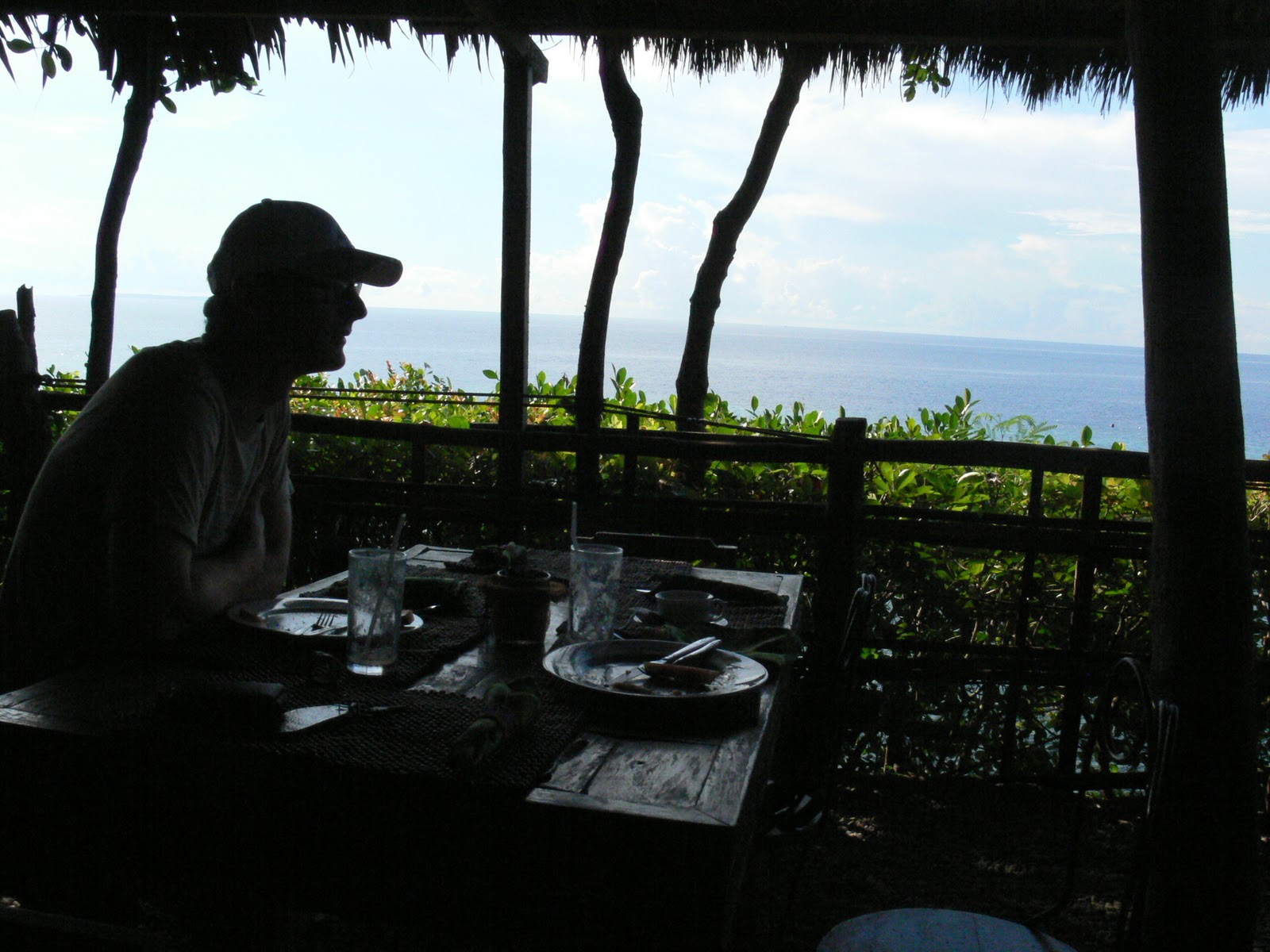

I found it something of a paradox, and yet no real surprise, that having been served the most delicious home-baked bread the evening before, our bacon and eggs were instead garnished with a sweet waffel which typifies the unhealthy nature of a large proportion of all food on offer here in the Philippines. It appears that even on an organic bee farm which actively promotes healthy eating, allowances still have to be made to cater for the ever-present demands of this Asian nation's incredibly sweet tooth.


With our stomachs full, we then headed out in the SUV across the bridge back to the mainland and made our way to the tarsier sanctuary, home to the world's smallest primates.


Being only around 5 inches in height, their size was truly incredible to behold. Their eyes were almost bewitching, but I think what I found most fascinating were their hands and finger nails. There are times when I feel I have to stand back and simply admire what nature has created, and this was certainly one such moment. These animals were beautiful.


From the sanctuary we proceeded inland to the Chocolate Hills, so called because they all turn brown in the soaring heat during the Filipino summer months of March, April and May.


It was an extremely picturesque view across the countryside, with numerous contrasts caused by the constantly changing sunlight. However, even here when you start to climb the 214 steps leading to the viewing outpost, you can't escape from some of the Philippines' more questionable attributes.


Our tour then incorporated a lunch river cruise which at times was so bad, it was positively entertaining. Whilst waiting to board the craft, we were treated to a never-ending rendition of tunes such as Hello Dolly by a group of six old men who looked about as excited as if they'd been playing the same tune for the past 50 years. Indeed, it's not beyond the realms of possibility that they actually had been! The live music on the boat then got progressively worse when a guy started singing with a guitar that I even I could tell was wildly out of tune, and everybody subsequently sought solace in the buffet on offer. No member of the crew seemed even remotely interested in the fact that passenger numbers onboard clearly surpassed the absolute limit of 40 stipulated in the safety certificate, though in all probability the fact that the expiry date had been blacked out presumably rendered the certificate invalid anyway. With a painful rendition of the CCR classic 'Proud Mary' then resounding in our ears, we tried our best to ignore the audio torture by focusing on admiring the passing landscape instead.


Eventually things brightened up from a musical perspective when we neared a jetty protruding from the river banks lined with coconut palms. As we approached we were relieved to be serenaded by a choir of lilting female voices drifting out across the water which thankfully prompted our very own music man to give his vocal cords a rest.


As we docked we were greeted by approxiamtely 15 women in traditional costumes all strumming ukuleles and singing, accompanied by women on their knees banging long poles against the wooden floor in time to the music.


We tourists were encouraged to join in and inevitably some duly obliged.


The river cruise was followed by a visit to two of Bohol's most famous tourist attractions, the Ladybody Marimar together with his charge Prony, the 23-foot-long python.


Inspired by such icons to sail close to the wind, I ventured into the cage myself to get a closer look at Prony.


As a reward for my audaciousness, I was hoping that Marimar would then personally model his most fetching snakeskin bra and panties for us in the flesh. However, all we were treated to instead was a brief peep into his fashion accessories wardrobe and it didn't make for pretty viewing.


With the catwalk parade over for the day, all that remained was to stop off at Baclayon Church in Tagbilaran, which is one of the oldest in the Philippines that still remains standing today.


Day 3

My third day began with a wake-up call at 4.15am in order to be up in time to join my friend Di and her dad Conrad dolphin watching.


After a short motorbike ride to Bohol beach club, it was impossible not to feel at peace in the tranquil surroundings whilst waiting for the sun to rise.


When it did, it was obvious that it was well worth sacrificing a few hours sleep for.


As we transferred boats and headed out into the bay, my expectations weren't great. However, our skipper Ernie evidently knew the exact spot to wait in and it didn't take long before dolphins started to appear on the horizon and then swim right alongside the boat.


More and more started to surface and at times it felt almost like a dolphin show, as whole schools would clearly be visible only a short distance from where we were sitting. At times they even jumped out the water in unison swimming four abreast. It was breathtaking.


The dolphin spectacle over, Di decided to catch some rays perched on the bow of the boat as we made our way towards the island of Balicasag.


Upon arrival, the snorkels and masks came out and I braved my fear of the water by putting on a lifejacket and with the help of the deckhand Peter, followed Di into the water.


The water was extremely clear and one or two of the fish that were swimming around the coral reef just a few metres below were spectacular. Once I'd eventually overcome the worst stages of my anxiety, it began to get a little more enjoyable, although as always I was relieved to get back on the boat and discuss political history with Conrad.


After returning to Bohol Beach Club we were treated to some traditional Philippine local attractions.
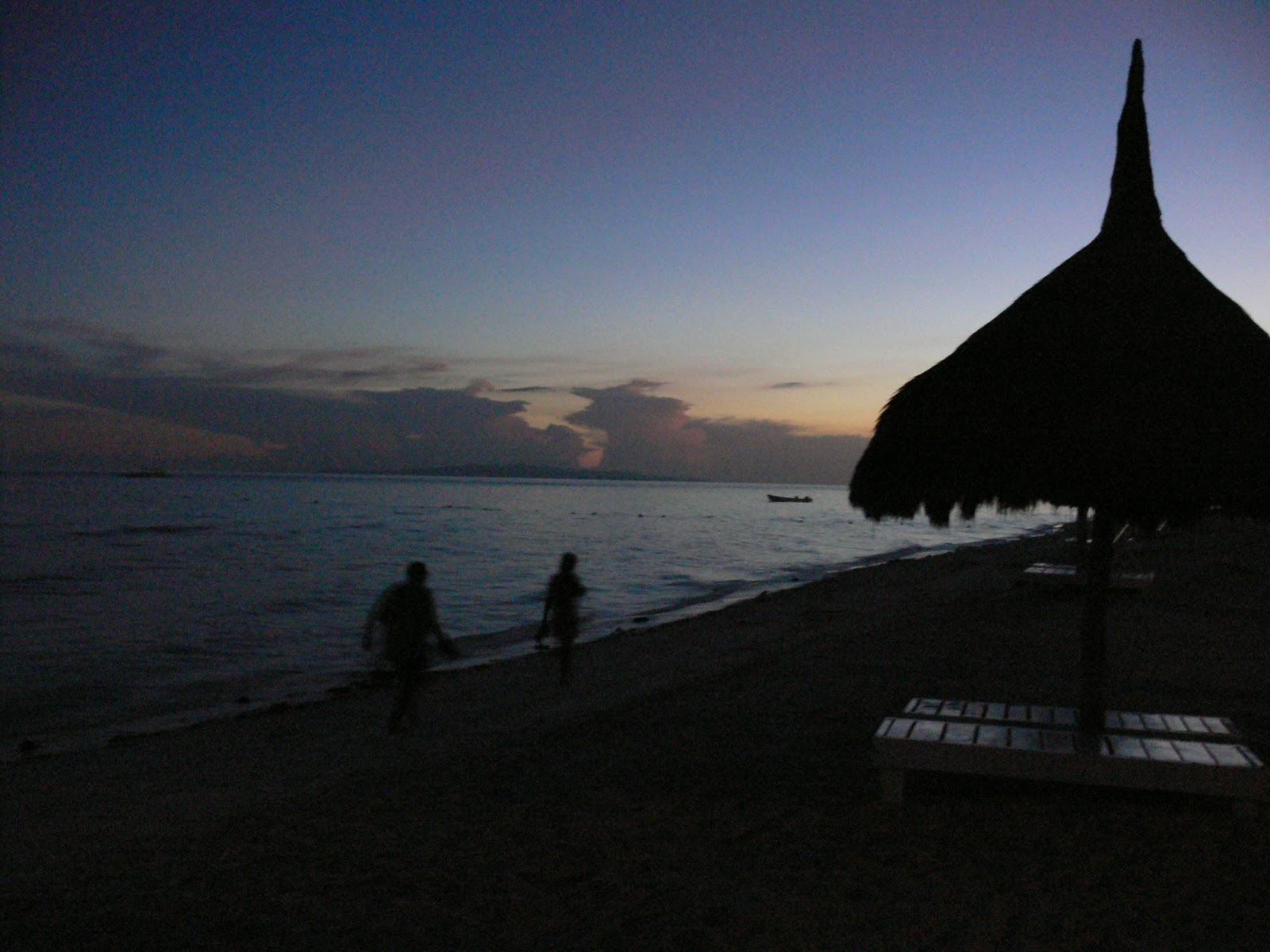

Soeren joined Conrad and myself for a beer after his diving adventure was over and after a long afternoon nap, we took our final walk of the day along the beach, with the setting sun disappearing over the horizon.  


Day 4

Soeren and I decided to follow our day in the ocean by hiring a car and touring the island to take a much closer look at the wonderful old churches that Bohol has to offer. We certainly weren't disappointed.


Our first stop was Panglao church not too far from the Bee Farm, where we arrived just as a wedding ceremony was about to start.


Still on the island of Panglao, we then proceeded to Hinagdanan Cave, which was incredibly humid despite its location underground.


Back on the island of Bohol, we then stopped off at a number of beautiful and historic places of worship at Alburquerque...


...and at Loay, with its incredibly ornate ceiling...


... and tower dating from 1822.


At Loboc, we returned to the scene of our lunch river cruise on day 2...


 ... and at Sikatuna, we visited our first church which was built by the Filiponos and not by the Spanish.


Our final visit of the morning was to Maribojoc, where the church is directly adjacent to a public school...


... and shortly after, we stopped for a late picnic lunch at the 18th century Punta Cruz watchtower which was built as a lookout post to warn against pirates along the coast.


The afternoon began with a visit to Loon church...


... the church at Calape...


... and an unforgettable tour of Calape market...


... which ultimately proved a failed attempt to initiate us into the acquired art of Filipino culinary specialities.


The food on offer at the market at Tubigon didn't fare much better either when it came to whetting our appetites...


... but then unlike Calape, Tubigon market didn't have a bakery selling authentic Choco-germans for just 1 Peso as its saving grace!


If you want to get around the island of Bohol...


... then a trike seems to be the most popular means of transport...


... unless of course you prefer to travel in real style...


... by riding on the roof of a Jeepney!


Meanwhile Soeren and I ended our day with a trip to a tacky private resort overlooking the coast and the outskirts of the Chocolate Hills. Whilst there I couldn't resist entering into the spirit of things by striking up a typically Asian pose to imitate the locals. When in Rome as they say....


Sunday, 23 October 2011

Fort Bonifacio

The area of Metro Manila that I live and work in is called Fort Bonifacio. It is named after the famous Filipino freedom fighter Andres Bonifacio and the area which today bears his name is one of the most up-market and expensive districts of the capital. The evidence can be seen all around you in the people that live here, the type of goods on sale in the shops, the extortionate price of property and the cost of eating even a basic meal here.


Imelda Marcos still dines regularly at the exclusive Chelsea restaurant in Serendra at the end of Bonifacio High Street and armed security guards are omnipresent in the Fort everywhere you go. They are even right outside my building in front of the most tacky and horrendous looking commercial outlet you can possibly conceive of. So if you're looking for incontestable proof that the Philippines was the only official US colony in history, then look no further than the Fort. Even the layout of its boulevards and the street names they bear are Americanized.


The capital city of the Philippines is certainly a unique entity. Despite having just one name, the urban sprawl known as Metro Manila is in fact 16 separate cities (consisting of Manila, Pasig, Pasay, Makati, Quezon City, Mandaluyong, etc.) which at times appear to be linked to each other in nothing more than name. During the Marcos years, in rather nepotistic fashion, Imelda Marcos was appointed Governess of the whole area of Metro Manila by her husband Ferdinand. Now in more democratic days, each city has its own municipal mayor, all of whom seem to spend a great deal of time participating with each other in the age-old popular political sport of back-biting and in-fighting.


10 years ago, the Fort was a wasteland of sorts, used as part of a military base, a remnant from the days when it was actually, as its name suggests, a fort (or Headquarters or a military camp). Friends of mine have told me that when they were offered the chance to buy real estate here at the project's outset, they declined in the belief that a place such as this could never develop a soul or indeed attract people to invest and/or live here. During the intervening decade, Fort Bonifacio has become one of the most exclusive and sought-after areas of Metro Manila. As such, it is now known under a variety of names - as simply the Fort, or BGC, or by its full name Bonifacio Global City, or indeed just Global. A stroll through its streets at night will arguably reveal the ongoing absence of a soul, but in certain areas you will nevertheless enjoy the lure of bright fluorescent lights.


Fort Bonifacio forms one part of just one of these 16 cities in Metro Manila called Taguig. This itself makes Taguig a city of contrasts, as the parts of the metropole which lie outside of the Fort but within Taguig's city limits possess a mere fraction (and arguably none) of the trappings of wealth and splendour which are in evidence everywhere you go in the Fort.


These are pictures of the housing development which is part of Taguig but on the wrong side of the Fort's boundary. It is particularly pertinent that these photos were taken about 100 metres from Global's exclusive shopping mall Market Market. Indeed, in all probability, a large proportion of the customers who frequent Market Market do so in order to escape the poverty and oppressive heat for a few hours, given that most of the goods on offer there are beyond their financial reach. This is especially true at the weekend when you can queue for anything up to 90 minutes at the checkout of the supermarket just to buy a litre of milk.


Indeed the gathering of the clans that takes place there every Saturday and Sunday is quite something to observe. Christmas songs began playing in earnest in every shop there from 1st September onwards, and you could be forgiven for thinking that every weekend is the last one before Christmas, judging by the crowds that frequent each and every store in unceasing continuation.


Those that do have money in their pockets go to the mall because it's the most convenient place to find everything you're looking for under one roof - banks, hardware stores, beauty parlours, electrical outlets, phone shops, etc. Indeed, a large number of the stores in Market Market cannot be found anywhere else.

However, shopping in such affluent surroundings, and indeed just leading the ex-pat lifestyle here, (which despite my reservations I've inevitably succumbed to), is always something of a surreal experience, knowing that so much of what the average Filipinos see around them is destined to be enjoyed by those with the right passport or social standing. Taguig is a microcosm of a country openly consisting of 'haves' and 'have nots' and spending your time here can be incredibly thought-provoking as a result.


Sunday, 9 October 2011

Jeepneys

Jeepneys are a national institution in the Philippines and riding on one is certainly a experience not to be missed. Some Jeepneys are incredibly gaudy and garish in appearance, but you could be forgiven for thinking that's all part of their unique appeal and charm. They're everywhere you go in Manila and for the locals, they often represent their only means of transport across town.


The fare is incredibly cheap. Depending on how far you want to go, it varies between just 8 and 15 Pesos (12 or 22 pence). However, Manila traffic being what it is, don't expect to get anywhere fast. The longest journey I've been on to the other side of town took about an hour but still only cost 15 Pesos. The equivalent fare in a taxi would have been anything up to 250 Pesos (about £3.50), depending on which one of the 5 or 6 different routes the driver chooses to take. This alternative cab fare is still very reasonable for ex-pats like myself but unaffordable to the average guy in the street.


Filipinos are extremely religious and it's not unusual for Jeepneys to be adorned with religious symbols or slogans both inside and out. You can sit up front alongside the driver or on one of the two benches which occupy both sides of the elongated Jeep in the back. Either way you'll be aware of the vehicle's lack of suspension as you're bounced around in your seat. However, the locals are used to laughing in the face of adversity and it takes more than a cramped ride on uneven surfaces to wipe the smile off their faces.


I was warned that boardng a Jeepney is not without its dangers and I think it's fair to say that safety precautions are fairly non-existent. Being a sucker for sailing a little too close to the wind I ignored all advice and underwent my first Jeepney experience after the hours of darkness and up front without a seatbelt next to the driver. Even he told me I was mad, so from that point on, I decided to only travel on a Jeepney by day. I think it was a wise decision, because I've since talked to a young lady who was threatened at knifepoint on a Jeepney while travelling to work for the evening shift and I'm told it's not an uncommon experience. She actually thought that the driver may have been in on the ruse, although by all accounts, Jeepney drivers themselves are just as likely to fall victims to some of Manila's more unsavoury characters. They certainly have a very tough life and work incredibly long and punishing hours for just minimal financial reward which barely enables them to earn a living.


The other thing you may fall victim to on a Jeepney is the weather, as most of them are open to the elements. Being in the Philippines at the height of the monsoon season can leave you somewhat exposed when you've no panes of glass to protect you from the incessant downpours, although on warm days, it can get pretty sultry in the back of the truck too. The picture above should give you some idea of the levels of humidity that Filipinos face as a matter of routine. And of course it's worth bearing in mind that neither the passengers nor the drivers are returning to the privilege of air-conditioned condos provided by the workplace that we ex-pats enjoy. 

Despite all that, I still continue to take the odd infrequent Jeepney ride when the chance presents itself. My friend Nicky even managed to visit the Sarao Motors Jeepney factory over at Las Pinas during her stay here, where she tells me they still build Jeepneys even now. No doubt when I get around to following in her footsteps, the impulsive streak that I constantly fight against within me will be more than tempted to give serious consideration to actually buying one. Perhaps it's the little boy within the so-called adult man that envisages me spraying it with the Cross of Saint George and a picture of the Beatles, before using it to venture out into the provinces to start exploring this amazing country. Hopefully common sense will prevail instead!

Wednesday, 5 October 2011

Beauty and the Barong

Traditionally formal Filipino dress code is characterized by a barong which is a lightweight transparent garment worn over an undershirt. Barongs come in all shapes, sizes and price brackets and many of the more extravagant examples are intricately embroidered with patterns. Kathrina and I recently decided to attend a charity fundraiser at one of Manila's plushest hotels on the waterfront, so in order to be dressed in suitable attire, we both splashed out on a new outfit.

After considerable difficulty finding a barong that was long enough in the arms, thanks to Jacky's never-ending patience I eventually found one 4XL in size that actually fitted me. Kathrina opted for a slinky black number which really brought out the beauty of her incredible figure. We had our mug shots taken by the resident photographer as we arrived on the night, before settling back to watch what I considered a rather lacklustre cultural offering masquerading under the rather inappropriate title of 'Le Cabaret'. At well over $100 a ticket, I was expecting theatrical highlights which somewhat surpassed the show we were treated to, which effectively culminated in the so-called battle of the hip-hop dancers. Kathrina and I both agreed that we had been expecting something vastly different to what was actually on show, and much as the event was clearly in aid of some very good causes, we consequently decided to leave early and put our gladrags away for another occasion.

It will undoubtedly be December 21st before our garments see the light of day again, when Kathrina will be enjoying the biggest day of her life when she weds her sweetheart Paul at a traditional beach wedding ceremony in their hometown province by the sea. Kathrina comes from a family of excellent singers, so I will evidently experience the supreme vocal Filipino performance I was originally anticipating when I'll feel privileged to witness what is sure to be a truly unforgettable occasion four days before Christmas. I can hardly wait for the festivities to begin.

Tuesday, 4 October 2011

Teaching English in the Philippines

Life as a teacher here is completely different to anything I've experienced during almost 25 years working in a language classroom in Europe. Having grown accustomed to receiving a timetable on the first day of term with a schedule incorporating 5 or 6 classes of between 20 and 30 pupils in size, it was a bit of shock to arrive here and find that I'd be responsible for teaching a total of 8 pupils. This number has since grown to a class comprising of 11 children and I am gradually learning how best to support these pupils in the course of their school days when I'm not working as a mainstream teacher for almost 90% of my working week.


I see my cohort of 11 ESL learners for precisely one-eighth of my entire timetable and the work we cover is very flexible. Each of my pupils belongs to 1 of 4 Homebase classes (or tutor groups) and depending on which of the 4 Homebase classes they belong to, they have different lessons at any one time. Their timetable is divided up into 5 blocks (or lessons) each day, with each block lasting a total of 1 hour and 10 minutes. They have what are known as 4 Core subjects - English & Social Studies (taught in tandem for 2 blocks by the same teacher) and Maths & Science (also taught in tandem in exactly the same way). These 4 subjects account for almost two-thirds of pupils' timetables. The remaining third is divided up between various Encore lessons - PE, music, drama, etc. including ESL (or EAP as it is known here - English for Academic Purposes.) The pupils in my EAP class come from a variety of countries including Indonesia, Japan, Korea, China, Thailand, Vietnam, Norway and Argentina.


This teaching model is commonly referred to as 'inclusion' and my role in this system is to spend most of my time supporting these pupils in their 4 Core subjects. Since 5 of my 11 pupils are members of the same Homebase group, this is the class that I tend to spend most of my time with. I am also an advisory Homebase teacher with the same class, which means that I also see them during Homebase time at the end of the day on 2 occasions a week. There are 20 pupils in all in the class, and their official Homebase teacher is my North American colleague Teresa who has been a tremendous help in enabling me to adapt and settle in here. She is pictured here with the kids as they proudly hold aloft the much-coveted Grade 5 Shaw Cup which they won during the Modified Handball tournament during 2 days of Classroom Without Walls.

Wednesday, 28 September 2011

Filipino toilet habits

I'm most grateful to have recently been enlightened by my dear friend Kathrina about the fact that Filipinos consider our use of toilet paper to be 'gross' and most unhygenic. This came as quite a shock to me and I'm now psyching myself up to mentally prepare for my first authentic and real Filipino lavatory experience when she invites me to her home, as she has promised to do soon.


It seems that no Pinoy bathroom equipment is considered complete without the presence of the obligatory bucket and plastic 'dipper' (or 'tabo' in Tagalog) next to the toilet bowl, to enable you to wash your anatomy thoroughly with soap and water after the event. In more upmarket flats you can even pamper your derriere with a jet hose connected directly to the cistern. 


A few strips of toilet paper are seen as unsanitary substitutes for a good rub with a bar of Dove, so here's what I'll be using instead of my wet wipes next time I'm a guest in my friend's home (assuming I am still welcome there after she reads this). I'd be amazed if the idea catches on back home in Blighty! 

Tuesday, 27 September 2011

First impressions of the Philippines

8 weeks on after arriving in the Far East, here are a first few snapshots of just a small fraction of the many things I've experienced in this amazing country.


One of the perks of a Jeepney ride is liaising with the buxom ticket collector.
An extremely enjoyable experience not to be missed!


Looking across from Tagaytay Ridge to Taal Volcano, the smallest & one of the most active volcanoes in the world. This picture was taken during a brief interlude in the daylong incessant downpour, which prevented us from visiting the spectacular crater rim overlooking the lake within a lake.

At a photo shoot with Filipina models Cate...


... and Julie Ann ...


... and the talented hands of make-up artist Jacky.

Swanky bachelor pad complete with awesome view of Manila Golf Club and Makati
 from my bedroom window.